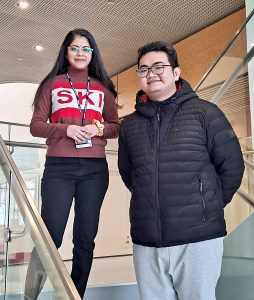
Charlotte Chen ’24 (ENG & CLAS), a senior from Westport, pursuing dual degrees in biomedical engineering and molecular and cell biology has received a National Science Foundation (NSF) Graduate Research Fellowship Program (GRFP) grant. Her research in the lab of IMS Polymer Program Director and Associate Professor of Chemical and Biomolecular Engineering Kelly Burke aims to modify silk films with antibacterial monomers to potentially prevent catheter-associated urinary tract infections.
“Being awarded an NSF-GRFP means that I get a lot more freedom with my doctoral studies– what my research project is, who my research advisors are, and where I want to conduct the research,” says Chen.
She served as president and as a conductor in UConn’s chamber orchestra and played violin in the symphony orchestra. She was a recipient of the Wiliam P. O’Hara Endowed Scholarship which provides funding for an honors student who demonstrates academic achievement, is enrolled full-time in either CLAS or the School of Fine Arts and demonstrates an interest in music.
Charlotte is also the digital editor for The Daily Campus. She will be a doctoral student at Brown in the fall to pursue a degree in biomedical engineering with the long-term goal of a career in the biotech industry.
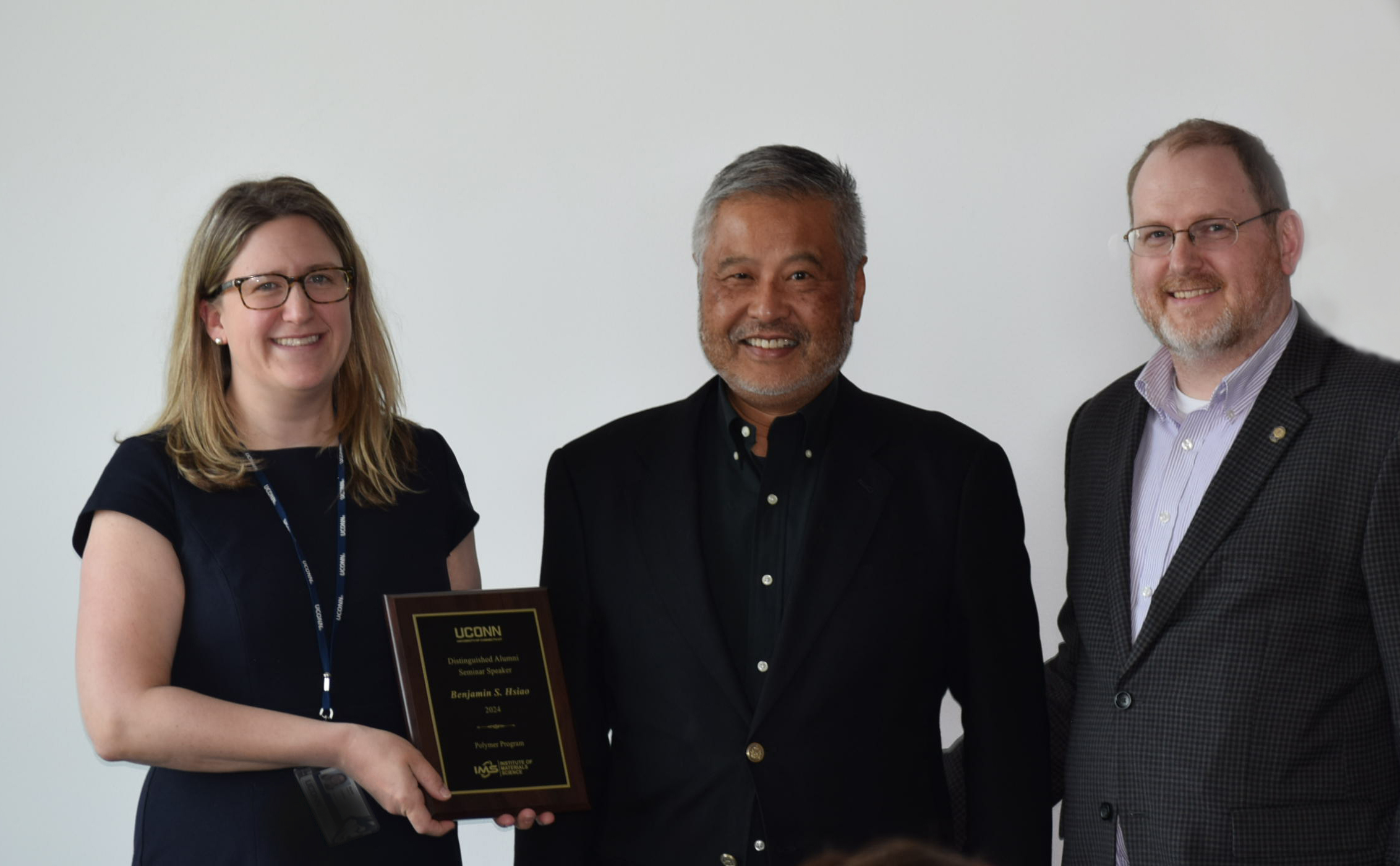
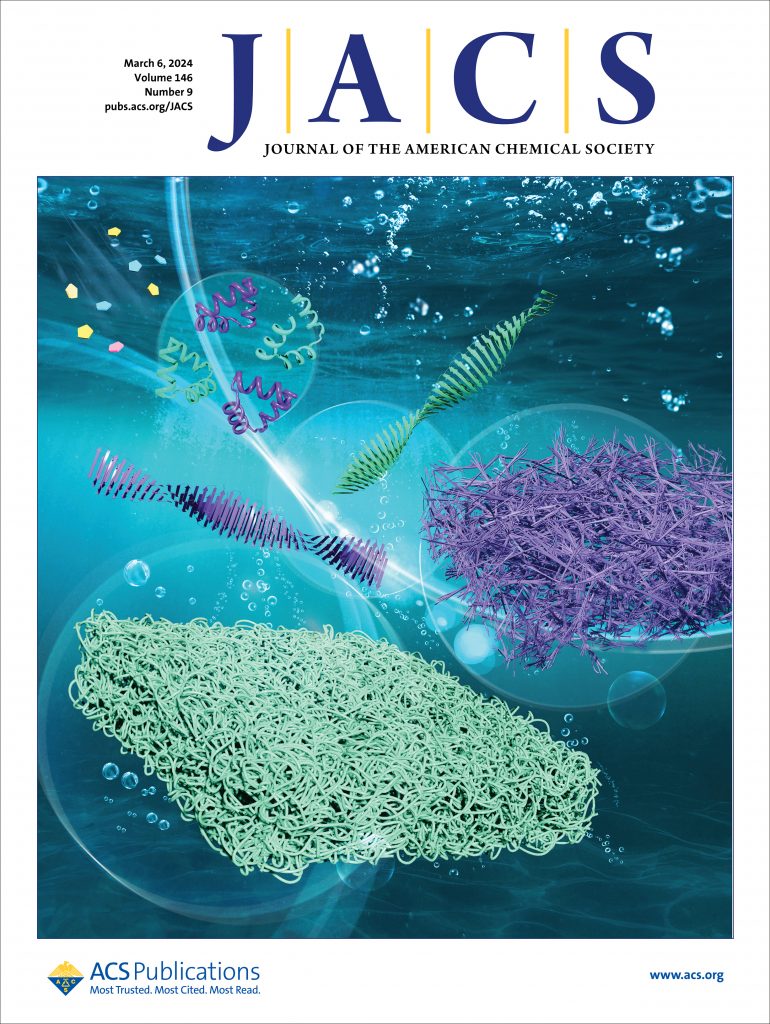 In a collaborative effort, researchers from the University of Connecticut (led by Profs. Yao Lin, VJ Kumar and Xudong Yao) and the University of Illinois at Urbana-Champaign (led by Prof. Jianjun Cheng) have made an advance in the rational design of synthetic polypeptides to develop filament-based hydrogels. The work, conceptualized and realized by the graduate students Tianjian Yang (UConn) and Tianrui Xue (UIUC), has been published in the Journal of the American Chemical Society (JACS) and featured as the cover of the March 6 issue.
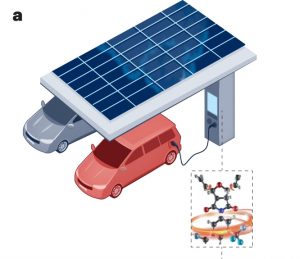 Professors Greg A. Sotzing and Pritish S. Aklujkar have been working with high temperature dielectrics used in high energy density capacitors. They are developing a new generation of all-organic polymer dielectric capacitors that can withstand high temperature conditions, eliminating the need for coolant systems. These capacitors will have a number of applications, including electric-vehicle charging stations and Electromagnetic Aircraft Launch Systems (EMALS) used to catapult jets from aircraft carriers. Their paper, “Chromogenic Identification of Breakdown” was published in Nature Materials, February, 2, 2024. Visit